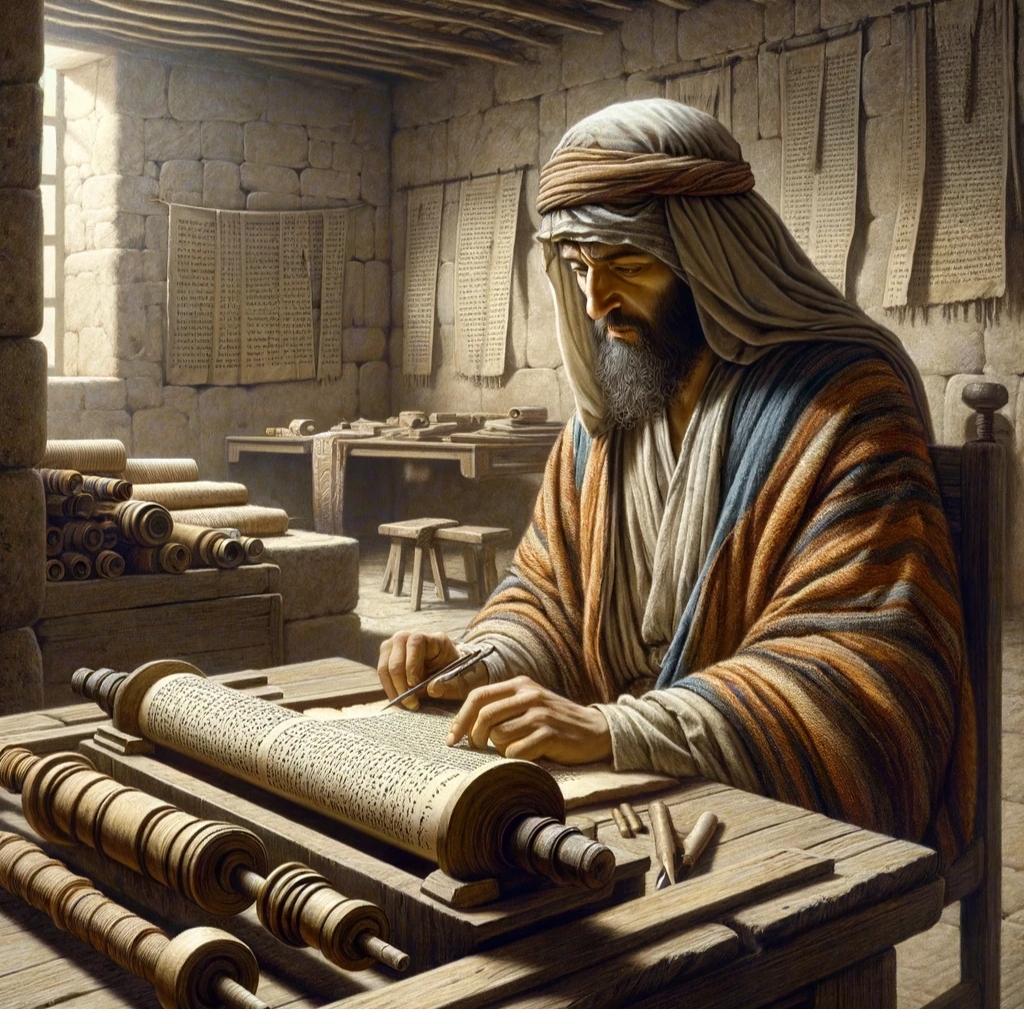
The Biblia Hebraica Quinta Editione, abbreviated as BHQ or rarely BH5, is the fifth edition of the Biblia Hebraica and when complete will supersede the fourth edition, the Biblia Hebraica Stuttgartensia (BHS).
Bible Texts and Versions
We must face the reality that while the original 39 OT manuscripts and 27 NT manuscripts were inspired by God [Lit. “God-breathed”] (1 Tim. 3:16), as the authors were moved along by the Holy Spirit (1 Peter 1:21), this was not the case with the copyists thereafter. Yes, hundreds of thousands of scribal errors crept into our manuscripts. Yet, there is ...
Codex Cairensis: A Notable Vellum Hebrew Manuscript of the Hebrew Scriptures
The Codex Cairensis (also: Codex Prophetarum Cairensis, Cairo Codex of the Prophets) is a Hebrew manuscript containing the complete text of the Hebrew Bible’s Nevi’im (Prophets). It has long been referred to as “the oldest dated Hebrew Codex of the Bible which has come down to us.”
THE DEAD SEA SCROLLS: Uncovered and Revealed
Dead Sea Scrolls is the name generally given to the manuscripts and fragments of manuscripts discovered in caves near the northwestern end of the Dead Sea in the period between 1946 and 1956.
THE DEAD SEA SCROLLS: A Deeper Study
Dead Sea Scrolls. Collection of biblical and extrabiblical manuscripts from Qumran, an ancient Jewish religious community near the Dead Sea. The discovery of the scrolls in caves near the Dead Sea in 1947 is considered by many scholars to be the most important manuscript discovery of modern times.
THE DEAD SEA SCROLLS: The Oldest Known Bible
Surveys the biblical manuscripts found in the caves around Qumran. The discovery of the Dead Sea Scrolls in the Judaean Desert has in many ways revolutionized the study of the Hebrew Scriptures as well as recent understanding of the Bible and canon.
INTRODUCTION to the Dead Sea Scrolls
Since 1947, when a Bedouin shepherd stumbled upon a cave (about seven miles S of Jericho and a mile from the Dead Sea) containing many scrolls of leather covered with Heb. and Aram. writing, biblical studies have been considerably altered by what has come to be known as the Dead Sea Scrolls.
The Syriac Peshitta Is a Look into the World of Early Bible Versions: Its Origins, Textual Character, and Critical Value
The Syriac Peshitta preserves a stable, conservative text and offers critical insights into early New Testament transmission and theology.
OLD TESTAMENT TEXTUAL STUDIES: The Aramaic Targums
The “Targums” were loose translations or paraphrases of the Hebrew Old Testament Scriptures into Aramaic. Although fragments of the early Targums of some books were found among the Dead Sea Scrolls, the Jewish Targums as a whole likely found their current form no sooner than about the fifth century C.E.
Is the Greek of the Septuagint the Same as the Greek of the New Testament?
The Septuagint (LXX) is a translation of the Hebrew scriptures and was made for the Jewish community, not Christians. The vocabulary is Greek and the syntax Hebrew. There is a Semitic influence in the vocabulary of the LXX. The New Testament is not a translation and is written for Christians who have the ransom sacrifice of Jesus Christ. Third, The Greek of the NT is 180 years to 310 years removed from the Greek of the Septuagint.


