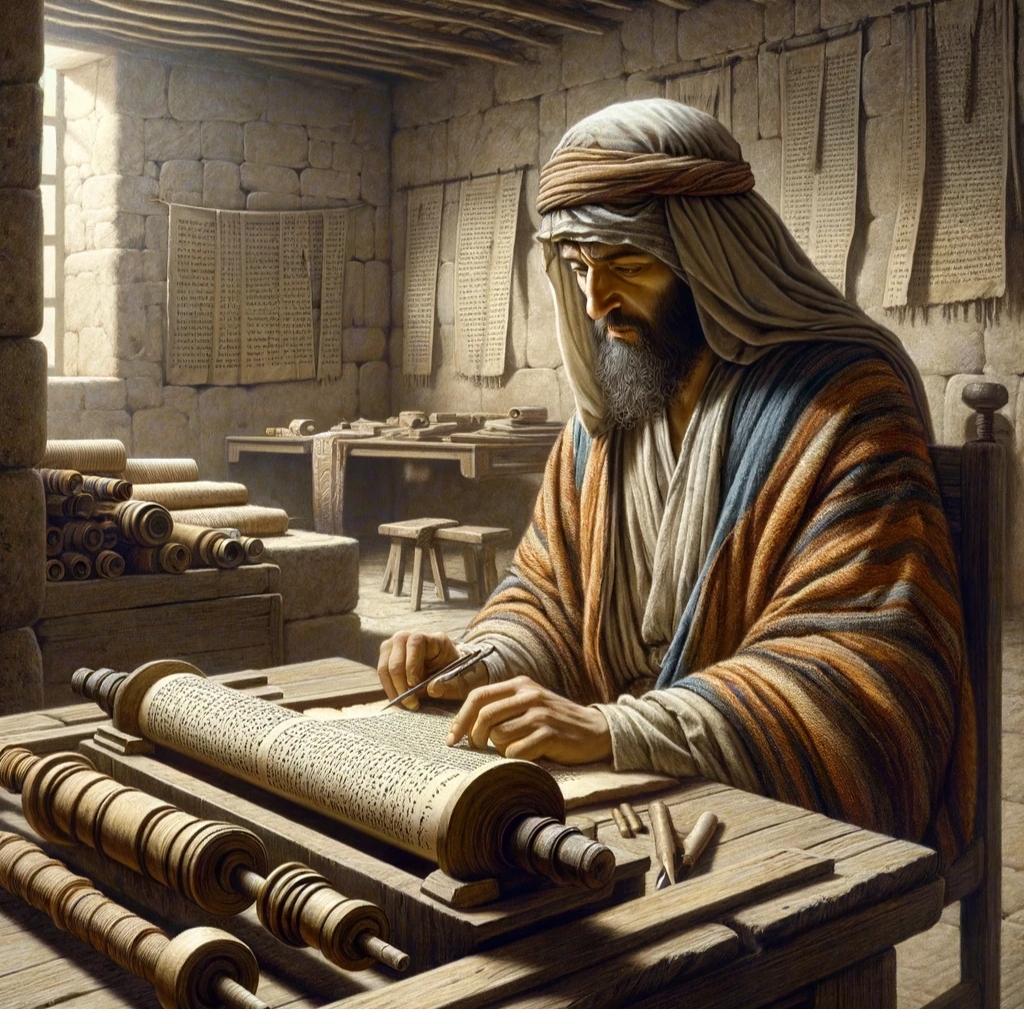
The Shapira Scroll (also known as the Shapira Strips) was a manuscript written in Paleo-Hebrew script. It was presented by Moses Shapira in 1883 as an ancient Biblical artifact and was the focus of a major archaeological controversy. Modern scholars are saying that it is 700 years older than the oldest Dead Sea Scrolls that date to about 250 B.C.E.
What is the Greek Septuagint (LXX)?
The Greek Old Testament, or Septuagint, is the earliest extant Koine Greek translation of books from the Hebrew Bible, various biblical apocrypha, and deuterocanonical books.
Emanuel Tov On the Nature of the Samaritan Pentateuch
The Samaritan Pentateuch, also known as the Samaritan Torah is a text of the first five books of the Hebrew Bible, written in the Samaritan alphabet and used as ...
Papyrus Rylands 458: The Oldest Copy of the Greek Septuagint
Papyrus Rylands 458 is a copy of the Pentateuch in a Greek version of the Hebrew Bible known as the Septuagint.
Papyrus Fouad 266 Is a Greek Septuagint Copy of the Pentateuch
Papyrus Fouad 266 is a copy of the Pentateuch in the Greek version of the Hebrew Bible known as the Septuagint. It is a papyrus manuscript in scroll form. The manuscript has been assigned palaeographically to the second or the first-century B.C.E.
Papyrus Oxyrhynchus 656: A Greek Fragment of a Septuagint Manuscript
Parts of four leaves from this Greek Septuagint codex that contain portions of six chapters of Genesis. This codex is very important because of its being dating to the late second or early third century C.E. However, aside from dating early, these chapters are absent in the Codex Vaticanus and they are defective in the Codex Sinaiticus. The article is easy to understand and the footnotes are in-depth adding even more information.
ORIGEN’S HEXAPLA: A Sixfold Text in Parallel Columns of the Old Testament
At the end of the second century, there were (at least) four competing Greek versions of the OT. Origen, one of the most important theologians in the Eastern church, was born in Alexandria, Egypt, and was active in the middle of the third century CE. Aware of differences between the Greek and Hebrew texts, he set out to bring order and understanding to the confusing array of competing textual witnesses and to produce an edition that would account for those variations.
THE BASICS of the Dead Sea Scrolls
The earliest MS evidence available for the OT text is also the most recently discovered. Since 1947 thousands of fragments of MSS, both biblical and nonbiblical, have come to light in the Dead Sea region.
What Is the Truth About the Dead Sea Scrolls?
The Dead Sea Scrolls, discovered in 1947, transformed biblical scholarship, revealing diverse textual traditions and evidence of ancient Jewish practices.
The Crown of All Hebrew Manuscripts: The Aleppo Codex
BEFORE the discovery of the cache of Hebrew scrolls in the Dead Sea caves in 1947, aside from a few fragments, our Hebrew Old Testament manuscripts were from the late 9th to the 11th century C.E. That is but a mere thousand years ago when the original thirty-nine Hebrew Old Testament Bible books date from 2,500 to 3,500 years ago. Does this mean that prior to 1947, textual scholars and translators were uncertain about the Hebrew Bible that lies behind our English Old Testament? No, there was the most important Hebrew manuscript, which is called the Keter, the “Crown,” that originally contained all the Hebrew Scriptures, or the “Old Testament.”


