Please Help Us Keep These Thousands of Blog Posts Growing and Free for All
Introduction
Apocalyptic themes have captivated believers for centuries. They involve a culmination of divine purposes, a final judgment, and a new order that will replace the present flawed systems of the world. These themes are often rooted in the Old Testament visions of prophets like Daniel, who described sequences of kingdoms rising and falling before the ultimate establishment of God’s everlasting dominion. In the New Testament, the Revelation to John offers vivid imagery of cosmic events that will precede the return of Jesus Christ, leading to the renewal of all things. Many have wondered whether these ancient visions still convey a pertinent message and whether they continue to shape the hope of Christians in our modern era.
Apocalyptic expectation refers to the anticipation of cataclysmic events that reveal God’s sovereignty and bring about the fulfillment of His promises. While interpretations may vary, the central consensus among those who hold a literal approach to Scripture is that apocalyptic passages point to actual future realities. Despite living in a world that often dismisses such visions as antiquated, many conservative Christians maintain that the apocalyptic descriptions in Daniel, Zechariah, Ezekiel, and Revelation remain essential for understanding God’s grand plan for humanity. These texts, while containing symbols and imagery, communicate future occurrences that culminate in Christ’s victorious return. The ensuing discussion will trace the foundations of apocalyptic themes in Scripture, examine the teachings of Jesus on the future, consider Paul’s portrayal of the end times, and address the question of Israel’s role in these unfolding events.
Old Testament Foundations of Apocalyptic Hope
The apocalyptic framework in Scripture does not begin in the New Testament. It draws substantially from the Old Testament, especially from the prophetic writings and the book of Daniel, which offers notable glimpses of future events. Written in the 6th century B.C.E. or possibly reflecting that era, Daniel includes visions of four beasts (Daniel 7) that symbolize successive world powers, concluding with a heavenly kingdom that endures forever. The narrative repeatedly underscores that human dominion will pass away, but God’s dominion stands firm.
Daniel 2:44 states, “In the days of those kings the God of heaven will set up a kingdom that shall never be destroyed. It shall break in pieces all these kingdoms and bring them to an end, and it shall stand forever.” This passage underscores a literal intervention of Jehovah, establishing His rule that supplants all earthly authorities. The language depicts an unshakeable realm, rendering human empires temporary. For Christians who adopt a literal interpretation, Daniel’s prophecies have not been wholly realized. Though some see partial fulfillment in past historical events, the ultimate manifestation of God’s enduring kingdom awaits a future moment.
Another relevant vision arises in Daniel 9:24-27, often termed the prophecy of “seventy weeks.” Various explanations have been proposed, but conservative interpreters typically see this as a set period climaxing in the Messiah’s appearing, rejection, and eventual triumph. While details may be debated, many agree that part of this prophecy awaits final fulfillment, including an ultimate resolution of sin and the restoration of righteousness.
In Zechariah, there is also an apocalyptic undercurrent. Zechariah 14 speaks of a day when Jehovah will stand upon the Mount of Olives, suggesting a dramatic intervention in human affairs. Zechariah 14:9 says, “Jehovah will be king over all the earth. On that day Jehovah will be one and his name one.” This text reflects the future reality of God’s direct reign, uniting heaven and earth under divine sovereignty. Those who hold to a literal approach see these promises as eschatological, pointing forward to the final stage of God’s redemptive plan.
 The Teachings of Jesus on the End
Jesus frequently addressed future events, drawing directly on the Old Testament while introducing an expanded perspective. Matthew 24, Mark 13, and Luke 21 record an extended discourse in which Jesus foretells the destruction of Jerusalem, the arrival of false prophets, worldwide upheavals, and climatic developments that culminate in his return.
Matthew 24:21 indicates, “Then there will be great suffering, such as has not been from the beginning of the world until now, no, and never will be.” Jesus’ words present a vivid picture of unprecedented turmoil followed by a glorious deliverance. This resonates with Daniel’s portrayal of a final period of tribulation before the establishment of the divine kingdom. Jesus’ admonition to remain alert and prepared underscores the practical effect of apocalyptic teaching for believers: “Therefore, stay awake, for you do not know on what day your Lord is coming” (Matthew 24:42).
Some question whether these references were fulfilled entirely by the events surrounding the destruction of Jerusalem in 70 C.E. Yet many conservative interpreters contend that, while those events foreshadow aspects of the final crisis, they do not exhaust Jesus’ prophecies. The final culmination includes his physical return, described in Matthew 24:30: “Then will appear in heaven the sign of the Son of Man, and then all the tribes of the earth will mourn, and they will see the Son of Man coming on the clouds of heaven with power and great glory.” This continues to be the bedrock of Christian apocalyptic hope, embracing a genuine future event that will reshape history in an unmistakable way.
In addition to these discourses, Jesus’ parables often incorporate eschatological images, emphasizing the ultimate vindication of the righteous and judgment of the wicked. Though expressed in varied narratives, the message converges on a future resolution under God’s hand. This consistent theme has long fostered an expectancy among believers, sustaining them through life’s difficulties and reinforcing the conviction that all present injustices will be rectified at the appointed time.
Paul’s Perspective: The Day of the Lord
Paul’s letters, composed in the mid-first century C.E., resonate with apocalyptic themes of judgment and resurrection, thoroughly grounding them in Christ’s completed work. First Thessalonians addresses the “day of the Lord,” highlighting the suddenness of the events and the importance of moral vigilance. First Thessalonians 5:2-3 declares, “You yourselves are fully aware that the day of the Lord will come like a thief in the night. When people are saying, ‘There is peace and security,’ then sudden destruction will come upon them.”
Paul integrates these ideas with a robust doctrine of resurrection, reflecting the conviction that believers, whether dead or alive at Christ’s coming, will be transformed. First Thessalonians 4:16-17 affirms, “The Lord himself will descend from heaven with a cry of command, with the voice of an archangel, and with the trumpet of God. And the dead in Christ will rise first. Then we who are alive, who are left, will be caught up together with them in the clouds to meet the Lord in the air, and so we will always be with the Lord.” Far from a distant or abstract notion, this future event was, and remains, a central hope for many Christians.
Paul also addresses the figure of “the man of lawlessness” in 2 Thessalonians 2, connecting it with end-time rebellion against God. Second Thessalonians 2:3-4 states, “That day will not come, unless the rebellion comes first, and the man of lawlessness is revealed, the son of destruction, who opposes and exalts himself against every so-called god or object of worship.” Here, Paul’s apocalyptic scenario involves the rise of an anti-Christian power before the Lord’s final victory. The clarity of his words affirms a future unfolding of these conditions.
In Romans 8:19-22, Paul describes the entire creation groaning and longing for redemption, a cosmic transformation that is intrinsically linked to the manifestation of the children of God. This cosmic dimension of redemption is woven into the apocalyptic expectation: the world itself, subjected to futility, eagerly awaits the final unveiling of God’s redemptive plan.
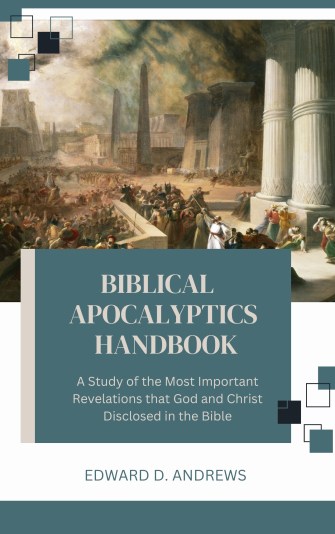 Revelation’s Climactic Vision
The Revelation to John presents an extensive apocalyptic account. Written at the end of the first century C.E., Revelation offers visions of seals, trumpets, bowls of wrath, and a final confrontation between good and evil. These elements converge upon the return of Christ, the binding of Satan, and the creation of a new heaven and a new earth. Although Revelation employs symbolic language, many conservative interpreters assert that it describes literal events that will transpire in the future.
Revelation 1:7 emphasizes, “Behold, he is coming with the clouds, and every eye will see him, even those who pierced him.” The global scope of this unveiling indicates that Christ’s return is not a hidden or purely spiritual phenomenon. Revelation 19 portrays his triumphant appearance, accompanied by the armies of heaven, to judge the nations and establish his reign. Revelation 20 unveils the millennium—understood by many in a literal sense—where Christ’s kingship is exercised before the final rebellion and the ultimate judgment.
Revelation 20:12 states, “I saw the dead, great and small, standing before the throne, and books were opened.” This universal judgment highlights personal accountability for every individual. For believers, the Lamb’s book of life represents the hope of salvation grounded in Jesus Christ’s sacrifice and resurrection. The concluding chapters, Revelation 21 and 22, depict the new Jerusalem descending from heaven, signifying God’s intimate dwelling with humanity. This final consummation is not a mere symbol of spiritual renewal; it manifests the completion of God’s redemptive plan in the fullness of historical reality.
The Role of Israel in Apocalyptic Interpretation
While the Old Testament presents Israel as a central participant in God’s redemptive history, the New Testament reveals a transformative perspective. Jesus himself confronted the religious leaders of his day for their opposition to him, culminating in statements such as Matthew 21:43, “Therefore I tell you, the kingdom of God will be taken away from you and given to a people producing its fruits.” This underscores that ethnic lineage does not guarantee automatic inclusion in the divine purposes.
Paul’s extended discussion in Romans 9-11 clarifies that, though Israel historically occupied a unique place in God’s plan, a shift occurred with the arrival of Christ. Romans 9:6 declares, “Not all who are descended from Israel belong to Israel.” Faith in Christ, not ancestry, is presented as the key to membership within God’s covenant. Romans 11:20 cautions against pride, noting that branches were “broken off because of their unbelief,” yet Paul envisions a future scenario in which Jewish individuals will turn to Christ. Romans 11:26 says, “And in this way all Israel will be saved.”
Some interpret this as a prophetic announcement that a collective acceptance of Christ among Jewish people will take place prior to or during end-time events. Others see Paul describing a continual process through which Jewish believers join the larger family of faith. Either way, the scriptural emphasis rests on faith in Christ as the defining element of participation in God’s promised blessings. Galatians 3:28 summarizes this principle: “There is neither Jew nor Greek… for you are all one in Christ Jesus.” Ethnicity yields to faith, establishing a spiritual reality that supersedes ancestral ties.
This informs the understanding of the “Israel of God” mentioned in Galatians 6:16, sometimes interpreted as designating the community of believers—both Jews and Gentiles—who recognize Jesus as Messiah. The apocalyptic outcome, according to this view, does not revolve around ethnic Israel being restored to a special status if it rejects Christ. Instead, it rests upon the principle that those from Jewish backgrounds, along with Gentiles, can be grafted into the people of God through acceptance of the Messiah.
Jewish People and the Antichrist Question
In some of the Johannine writings, one reads of “many antichrists.” First John 2:22 states unequivocally, “Who is the liar but he who denies that Jesus is the Christ? This is the antichrist.” This text includes those—regardless of ethnicity—who refuse to acknowledge Jesus’ divine sonship. As a result, historical Judaism, by and large, has not accepted Jesus’ messianic claims. Those who remain in unbelief, according to these texts, are categorized as standing in opposition to Christ.
While this language may appear polemical, it reflects the weight that the early church placed on the confession of Jesus as Messiah. The distinction should be drawn between condemning individual Jews, who are invited to believe in Christ just as anyone else, and noting the theological stance of Jewish religious authorities in general. The presence of “many antichrists” does not exclude a future change of heart among Jewish individuals or communities. Paul’s hope in Romans 11 is that many from Israel will repent and embrace Christ, joining the wider body of believers.
Guided by the Spirit-Inspired Word
These reflections on apocalyptic hope draw upon the Spirit-inspired Word of God, rather than an alleged indwelling Spirit that operates independently within each believer. A conservative perspective holds that the Scriptures alone constitute the guiding authority in matters of doctrine and practice. Second Timothy 3:16 states, “All Scripture is breathed out by God,” affirming the divine origin and reliability of the biblical texts.
The apostles, specifically chosen by Jesus, were promised guidance by the Holy Spirit into all truth (John 16:13). However, that particular promise was directed to the apostolic circle, not to every Christian. Today, believers possess the completed canon of Scripture as the revelation of truth. By studying and applying these writings, believers can understand apocalyptic themes and the eternal objectives that God intends to accomplish.
The Great Tribulation and Life’s Difficulties
In many apocalyptic discussions, the notion arises that God utilizes intense adversity to refine or strengthen His people. Yet, it is crucial to distinguish scriptural teaching from popular sentiments. James 1:13 cautions, “Let no one say when he is tempted, ‘I am being tempted by God,’ for God cannot be tempted with evil, and he himself tempts no one.” Difficult times exist because human beings, in rebellion against divine sovereignty, experience the consequences of a world separated from God’s protective design. The final triumph of Christ brings relief from these hardships, but Scripture does not present them as orchestrated by God to produce spiritual growth.
The Great Tribulation, mentioned by Jesus in Matthew 24:21, appears as a period of unparalleled anguish prompted by human and demonic forces. It is not a refining crucible that God specifically creates to strengthen believers. Instead, it represents the culmination of evil’s rebellion before God’s final judgment. The tragedies of history and the ones still to come serve as demonstrations of the inherent flaws of human independence from God. Consequently, when Jesus returns, he establishes a kingdom where these tragic realities cease to exist (Revelation 21:4).
Christ’s Return and the Resurrection of the Dead
Apocalyptic expectation is not merely about calamities or fearful imagery. It culminates in the joyous event of Christ’s return, ushering in the resurrection of the dead. First Corinthians 15:52 declares, “The trumpet will sound, and the dead will be raised imperishable, and we shall be changed.” Here, Paul explains that believers’ mortal bodies will be transformed to inherit the immortal kingdom of God. This resurrection is not a metaphor but a literal transformation promised to those who belong to Christ.
Following this resurrection, biblical texts indicate that Christ will reign until all enemies are subdued (1 Corinthians 15:25-26). Death itself will be vanquished, affirming that apocalyptic hope is ultimately an affirmation of life. Believers stand assured that the present world’s brokenness, decay, and injustice will not have the final word. The hope for a glorified resurrection body and an eternal fellowship with God propels Christians to look beyond immediate circumstances and to remain steadfast in faith.
The Question of Eternal Punishment
The question often arises about the nature of hell, Hades, Sheol, Gehenna, or Tartarus, which the Scriptures refer to as the realm of the dead. Some traditions present these as places of unending torment, while a literal reading of certain passages can lead to the understanding that they are the common grave or the realm of the dead. Passages like Ecclesiastes 9:5 reflect a perspective on the dead’s condition, stating, “The living know that they will die, but the dead know nothing.”
While interpretations vary, the conviction for many is that a final judgment awaits unbelievers, leading to the “second death” mentioned in Revelation 20:14-15. Those found outside the Lamb’s book of life face condemnation, whereas believers experience eternal life. Even so, the emphasis of apocalyptic prophecy remains on the triumph of God’s righteous kingdom, rather than the ongoing torment of the lost. This frames the final judgment as an ultimate separation, culminating in the removal of all evil and suffering from God’s restored creation.
No Allegorical Interpretations
A key hallmark of conservative apocalyptic teaching is the insistence upon a literal, historical-grammatical reading of Scripture. Rather than allegorizing the Bible’s visions of beasts, plagues, or a new creation, proponents of this approach strive to interpret the text within its immediate historical context and then uphold the original intent of the authors as predictive of future realities. Allegorical or typological readings can sometimes obscure the plain meaning of the text, leading to confusion or speculative conclusions. As a result, apocalyptic expectancy is grounded in the belief that the prophets and apostles described actual events that will unfold according to God’s sovereign timetable.
No Place for Modern Skepticism
In some contemporary settings, apocalyptic themes are met with skepticism. Critics argue that such ideas emerged from an ancient worldview no longer relevant today. Yet for those committed to a literal hermeneutic, these passages hold unchanging truths, as they are rooted in the revelation of the eternal, all-knowing God. The testimony of Jesus in Revelation 22:13, “I am the Alpha and the Omega, the first and the last, the beginning and the end,” reassures believers that God’s plan transcends human philosophies or cultural shifts.
A literal reading of the apocalyptic texts invites Christians to place unwavering confidence in God’s promises, even when the present environment appears to discount a supernatural intervention. The conviction that Christ will return physically, judge the living and the dead, and inaugurate a reign of perfect righteousness stands firm, irrespective of modern trends. This perspective does not rest upon human speculation but on the authority of Scripture.
Encouragement for Believers
Although the apocalyptic outlook often includes dire pictures of future calamities, it is intrinsically bound up with assurance for believers. Those who follow Christ take comfort in his repeated exhortations to fear not and in the consistent biblical message that God remains in control. Romans 8:31 exclaims, “If God is for us, who can be against us?” That question conveys a bold confidence that no adversity—whether global chaos, persecution, or personal hardship—can separate believers from God’s love revealed in Christ.
Apocalyptic texts unveil the conclusion of history from the divine perspective, reinforcing the truth that evil is temporary. Revelation 21:4 promises, “He will wipe away every tear from their eyes, and death shall be no more, neither shall there be mourning nor crying nor pain anymore.” Such language is neither figurative nor wishful thinking for the literal interpreter. It portrays an actual future in which God restores creation to its intended harmony, free from sin and its bitter consequences.
The Apocalyptic Hope and the Worldwide Mission
Jesus issued the Great Commission to his disciples before ascending to heaven (Matthew 28:18-20). Although not explicitly apocalyptic, this commission sits within the broader framework of eschatological expectation. As the gospel spreads across the world, people of all nations are called to faith. The ultimate unity of believers—composed of individuals from every background—corresponds to the apocalyptic vision of Revelation 7:9, which describes a vast multitude from every nation standing before the throne.
This mission continues until the end of the age. Matthew 24:14 indicates, “This gospel of the kingdom will be proclaimed throughout the whole world as a testimony to all nations, and then the end will come.” The apocalyptic perspective, therefore, energizes evangelistic efforts, since it foresees a definitive conclusion to world history in which those who follow Christ will be vindicated and those who resist him will face judgment.
Addressing Modern Concerns
Critics who dismiss apocalyptic hope as escapism misunderstand its biblical roots. Apocalyptic passages do not encourage disengagement from moral responsibility. Rather, they insist that earthly life matters precisely because God’s redemptive plan will soon bring accountability for all. First Peter 4:7 affirms, “The end of all things is at hand; therefore be self-controlled and sober-minded.” The nearness of the end fuels ethical living, urging believers to reject complacency.
Another question arises: is this future all predetermined, leaving humans without genuine choice? Scripture refutes that notion by teaching that God, who knows the future perfectly, still addresses human beings as responsible moral agents. Joshua 24:15 proclaims, “Choose this day whom you will serve,” indicating real decision-making power. The biblical narrative consistently depicts human choices as significant, even though Jehovah foresees the outcome.
Salvation Through Faith in Christ Alone
Although apocalyptic texts might spark questions about the fate of different groups, the core message of the New Testament remains that salvation comes exclusively through Jesus Christ. In John 14:6, Jesus states, “I am the way, and the truth, and the life. No one comes to the Father except through me.” This is not a peripheral claim but the heart of the gospel. Romans 10:9 insists upon confessing “that Jesus is Lord” and believing “that God raised him from the dead,” guaranteeing salvation.
All, including Jews and Gentiles alike, stand before God on the same terms. Those who embrace Christ as Messiah are grafted into the spiritual household of God. Ephesians 2:18 declares, “Through him we both have access in one Spirit to the Father.” Disputes over Israel’s future must be seen in that larger theological context, where it is faith in the crucified and risen Christ that defines God’s new covenant community.
Are the Jewish People Still God’s Chosen?
Passages like Matthew 21:43 and Romans 9-11 indicate that the question of Jewish identity in God’s plan is nuanced. Jesus confronted the religious leadership of Jerusalem for rejecting him, describing the transfer of the kingdom to others who would produce its fruits. Paul, while acknowledging Israel’s unique historical role, emphasizes that the true people of God are those united by faith in Christ. Romans 11:20 underscores that unbelief caused branches to be cut off, whereas faith is the criterion for being grafted in.
Thus, those who deny Jesus stand in opposition to God’s revealed purpose. First John 2:22 identifies such denial with the spirit of antichrist. Yet this does not imply a condemnation of every individual Jew. Paul expresses earnest desire for his countrymen’s salvation, reminding believers that a remnant has always responded positively to God’s revelation. Throughout history, some individuals of Jewish descent have embraced Jesus as Messiah, joining the ranks of believers worldwide.
The Futility of Ethnic Privilege Alone
The New Testament dispels the notion that ethnicity alone ensures covenant status. John the Baptist warned in Matthew 3:9, “Do not presume to say to yourselves, ‘We have Abraham as our father,’ for I tell you, God is able from these stones to raise up children for Abraham.” This highlights a fundamental biblical principle: spiritual standing with God stems from genuine faith, not bloodline.
Galatians 3:7 adds, “Know then that it is those of faith who are the sons of Abraham.” This statement reorients the concept of “chosen people” to all who trust in Christ. The radical inclusivity of the gospel thus widens the biblical promise beyond ethnic confines to a universal invitation, while maintaining that only those who believe in Jesus become heirs to that promise.
Antichrists in a Pluralistic World
The question persists about how many antichrists there are. First John 2:18 says, “So now many antichrists have come,” confirming that anyone denying the identity and work of Jesus is in direct conflict with him. Historically, the majority of the Jewish people have not recognized Jesus as Messiah. The same can be said for people of many other backgrounds who deny him. The presence of these individuals or groups who oppose Christ remains a reality until the final revelation of the ultimate adversary, often called the Antichrist or the man of lawlessness (2 Thessalonians 2:3-4).
Believers, in grappling with these texts, uphold the necessity of proclaiming the gospel in the hope that all might come to repentance (2 Peter 3:9). Scripture does not teach that an entire ethnic group is irredeemably lost; rather, individuals from any background can come to faith at any time. From a literal standpoint, the ultimate resolution to the existence of antichrists lies in the final judgment, where truth and error are fully exposed and God’s justice is established.
The Unity of Christ’s Body
One overarching theme that arises from apocalyptic texts is the unity of believers in Christ. The new covenant does not feature an exclusive ethnic identity for those who inherit the promises of God. Ephesians 2:14 affirms, “He himself is our peace, who has made us both one and has broken down in his flesh the dividing wall.” This statement addresses Jews and Gentiles, reconciling them into a single body of believers.
The unity of God’s people is not a vague aspiration but a concrete reality rooted in the sacrifice of Christ. Believers are encouraged to celebrate this shared identity, engaging in mutual edification, prayer, and steadfast devotion to God’s Word. The bond uniting them transcends differences of language, culture, or heritage. Revelation 7:9 envisions a vast multitude from every nation and tribe, worshiping before the throne. The vision underscores that apocalyptic hope includes the final gathering of a diverse (yet faithfully obedient) assembly belonging to the Messiah.
Living in the Expectation of Christ’s Return
Throughout church history, there have been attempts to set dates for Christ’s return or to interpret specific events as immediate signs of the end. Most literal interpreters resist date-setting, noting that Jesus himself stated, “Concerning that day and hour no one knows” (Matthew 24:36). Instead, believers are counseled to remain watchful and engaged in the Lord’s service until he comes.
This stance fosters perseverance, generosity, and a readiness to bear witness to the gospel. When difficulties intensify, believers recall that Jesus foretold such conditions, promising eventual deliverance. John 14:1-3 preserves Jesus’ comforting words, “Let not your hearts be troubled. Believe in God; believe also in me… I go to prepare a place for you… I will come again and will take you to myself.” Apocalyptic hope, therefore, is not a cause for anxiety but for expectant longing for the fullness of salvation.
No “Once Saved, Always Saved”
Some theological traditions assert an eternal security that guarantees believers cannot forfeit salvation. Others, adhering to a literal reading of Scriptural warnings, contend that faith must endure to the end. Hebrews 3:14 explains, “We have come to share in Christ, if indeed we hold our original confidence firm to the end.” This aligns with Jesus’ words in Matthew 24:13, “The one who endures to the end will be saved.”
The apocalyptic lens clarifies the high stakes involved. In the face of widespread deception and opposition, believers are exhorted to remain steadfast. Final salvation, viewed through these warnings, is not simply a matter of past profession but of continuing in faith. The apocalyptic promise accentuates the need to abide in Christ, relying on the Spirit-inspired Word for instruction and reproof.
Rejecting Modern Relativism
Apocalyptic literature confronts modern relativism by declaring absolute truths about God’s impending judgment and Christ’s return. The notion that all beliefs lead equally to God contradicts Jesus’ warning that no one comes to the Father apart from him (John 14:6). Apocalyptic texts press the urgency of renouncing falsehoods and turning to the truth before history reaches its appointed climax.
This perspective also challenges the idea that God’s plan is to unify all religions in a single universal faith. Biblical apocalyptic firmly distinguishes between truth and error, between those who belong to Christ and those who oppose him. Revelation 18:4 calls God’s people to “come out” from the corruption symbolized by Babylon, reinforcing the idea that God’s redeemed community must maintain doctrinal purity rather than blending with contradicting ideologies.
Standing Firm Without Ecumenical Syncretism
The anticipation of Christ’s return influences how believers relate to broader religious movements. Instead of forging a common faith that obscures fundamental distinctions, believers rely on the teaching of Jesus and the apostles to preserve orthodoxy. Jude 3 exhorts believers “to contend for the faith that was once for all delivered to the holy ones,” emphasizing continuity with the apostolic message.
Apocalyptic hope implies that syncretistic endeavors, which merge conflicting theological claims in the name of unity, risk dishonoring the exclusivity of Christ. The call to be separate from the spirit of the antichrist remains consistent with biblical warnings against alliances that dilute the gospel. The clarity of apocalyptic prophecy about an end-time deception inspires believers to remain alert, guarding the message entrusted to them.
Conclusion: A Hope That Transcends the Present Age
Apocalyptic expectation continues to shape the outlook of countless Christians, who perceive these scriptural revelations as literal future events. From the Old Testament proclamations in Daniel and Zechariah, through the teachings of Jesus in the Gospels, to the visions of Revelation, the Bible consistently points toward a culmination of history characterized by the visible return of Christ, the resurrection of the dead, and the final establishment of God’s kingdom. This is not a hollow myth or merely symbolic imagery. It is the confident declaration that humanity’s story finds its resolution in the sovereign purposes of the Almighty.
God’s Word shows that Israel’s role in the end times rests on faith in Christ, not ethnic privilege. The Jewish rejection of Jesus as Messiah places them, like Gentiles outside of Christ, in opposition to God’s design. Yet Scripture foresees a time when many will recognize Jesus and be grafted back into the covenant people. In this new covenant framework, the dividing wall between Jew and Gentile is dismantled, creating a single community of believers united through faith in the crucified and risen Lord.
For believers, apocalyptic hope offers assurance that evil will not perpetually dominate the earth and that life’s hardships do not arise from God as a means of testing. Instead, these troubles stem from humanity’s rebellion against divine sovereignty, and they will meet their ultimate end when Christ triumphs. Standing firm requires diligent attention to the Spirit-inspired Word, cultivating a readiness for Christ’s imminent return and living in holiness and devotion to God.
Such a perspective rejects unbiblical teachings, upholds the certainty of prophecy, affirms the final reckoning of all creation under Christ’s rule, and awaits the day when Jehovah’s name is recognized universally. As Revelation 22:20 proclaims, “He who testifies to these things says, ‘Surely I am coming soon.’” In this confident, literal sense, apocalyptic expectation still resonates, reminding believers that everything God has promised will indeed come to pass, and that there is every reason to remain vigilant, hopeful, and faithful until the moment when all things are made new.
You May Also Enjoy
Are the Jewish People Still God’s Chosen People?
About the Author
EDWARD D. ANDREWS (AS in Criminal Justice, BS in Religion, MA in Biblical Studies, and MDiv in Theology) is CEO and President of Christian Publishing House. He has authored over 220+ books. In addition, Andrews is the Chief Translator of the Updated American Standard Version (UASV).
Online Guided Bible Study Courses
SCROLL THROUGH THE DIFFERENT CATEGORIES BELOW
BIBLE TRANSLATION AND TEXTUAL CRITICISM
BIBLICAL STUDIES / BIBLE BACKGROUND / HISTORY OF THE BIBLE/ INTERPRETATION
EARLY CHRISTIANITY
HISTORY OF CHRISTIANITY
CHRISTIAN APOLOGETIC EVANGELISM
TECHNOLOGY AND THE CHRISTIAN
CHRISTIAN THEOLOGY
CHILDREN’S BOOKS
HOW TO PRAY AND PRAYER LIFE
TEENS-YOUTH-ADOLESCENCE-JUVENILE
CHRISTIAN LIVING—SPIRITUAL GROWTH—SELF-HELP
APOLOGETIC BIBLE BACKGROUND EXPOSITION BIBLE COMMENTARIES
CHRISTIAN DEVOTIONALS
CHURCH HEALTH, GROWTH, AND HISTORY
Apocalyptic-Eschatology [End Times]
CHRISTIAN FICTION



Leave a Reply