The Dead Sea Scrolls, discovered in 1947, transformed biblical scholarship, revealing diverse textual traditions and evidence of ancient Jewish practices.
What Is the Truth About the Dead Sea Scrolls?

Christian Publishing House Blog
Apologetic Defense of the faith, the Bible, and Christianity
Discover our Manuscripts of Hebrew Scriptures Articles. Learn about the historical manuscripts that form the foundation of the Hebrew Scriptures.
The Dead Sea Scrolls, discovered in 1947, transformed biblical scholarship, revealing diverse textual traditions and evidence of ancient Jewish practices.

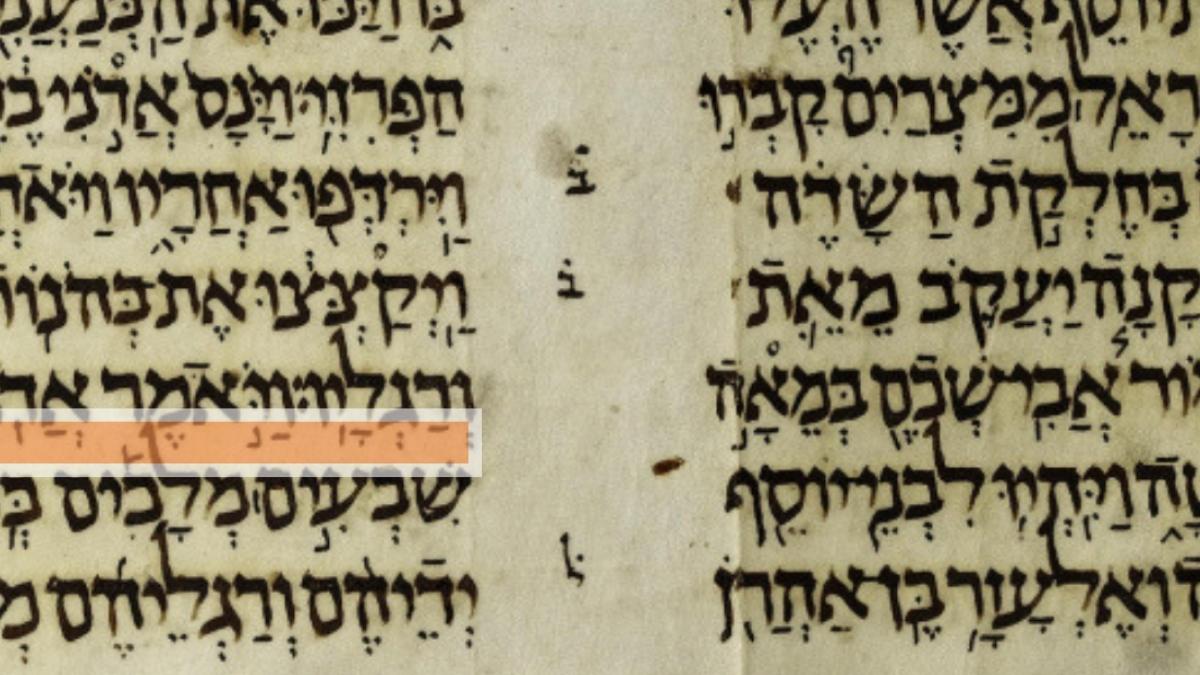
BEFORE the discovery of the cache of Hebrew scrolls in the Dead Sea caves in 1947, aside from a few fragments, our Hebrew Old Testament manuscripts were from the late 9th to the 11th century C.E. That is but a mere thousand years ago when the original thirty-nine Hebrew Old Testament Bible books date from 2,500 to 3,500 years ago. Does this mean that prior to 1947, textual scholars and translators were uncertain about the Hebrew Bible that lies behind our English Old Testament? No, there was the most important Hebrew manuscript, which is called the Keter, the “Crown,” that originally contained all the Hebrew Scriptures, or the “Old Testament.”

The largest organized collection of Hebrew Old Testament manuscripts in the world is housed in the Russian National Library ("Second Firkovitch Collection") in Saint Petersburg. Codex Leningradensis is the oldest complete manuscript of the Hebrew Bible in Hebrew. Manuscripts earlier than the 13th century are very rare.

The first list of the Old Testament manuscripts in Hebrew, made by Benjamin Kennicott (1776–1780) and published by Oxford, listed 615 manuscripts from libraries in England and on the Continent. Giovanni de Rossi (1784–1788) published a list of 731 manuscripts. The main manuscript discoveries in modern times are those of the Cairo Geniza (c. 1890)... Continue Reading →

How do paleographers place an accurate date on very old ancient Hebrew Old Testament Bible manuscripts? In 1948, this was the problem that was before Dr. John C. Trever (1916 - 2006) was a Biblical scholar and archaeologist, who was involved in the discovery of the Dead Sea Scrolls. When Dr. Trever first laid eyes on the Dead Sea Scroll of Isaiah, he pondered just this question.

The Leningrad Codex is the oldest complete manuscript of the Hebrew Bible in Hebrew, using the Masoretic Text and Tiberian vocalization. It is dated 1008 CE (or possibly 1009).

The Septuagint is the Greek translation of the Hebrew Scriptures (Old Testament). Initially, the Septuagint was made by Jews for the Jewish community, and they felt that it was just as inspired as the Hebrew Scriptures. However, it was used heavily by the early Church in their evangelism, pricing that Jesus was the long-awaited Messiah, which caused the Jews to return to the Hebrew.

The apostle Paul often quoted from the “Septuagint” The “Septuagint” was understood by many people to whom Paul preached The Septuagint is the common term for the Old Greek translation of the Hebrew Scriptures. The word means "seventy" and is frequently shortened by using the Roman numeral LXX, which is a reference to the tradition... Continue Reading →

The Dead Sea Scrolls, discovered in 1947, provide evidence that the Hebrew Old Testament has remained relatively unchanged over the past 1,400 years. They also reveal variant readings in Hebrew Bible texts used during the Second Temple period. The scrolls offer valuable insights into the historical setting of Jesus' life and times. This discovery continues to inspire scholars and Bible students in the 21st century.

Contrary to the cover-up theorists, after the Dead Sea Scrolls were discovered, numerous publications were released over the years that made those first finds accessible to scholars worldwide.

