Dead Sea Scrolls is the name generally given to the manuscripts and fragments of manuscripts discovered in caves near the northwestern end of the Dead Sea in the period between 1946 and 1956.
THE DEAD SEA SCROLLS: Uncovered and Revealed

Christian Publishing House Blog
Apologetic Defense of the faith, the Bible, and Christianity
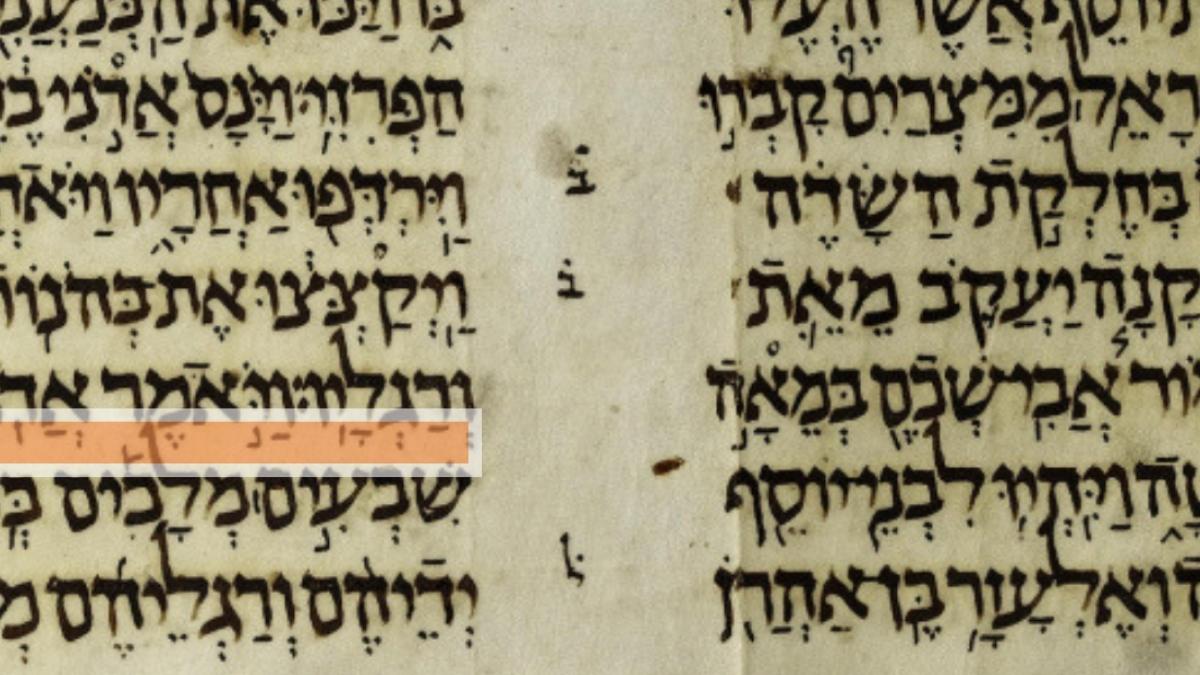
Discover our Manuscripts of Hebrew Scriptures Articles. Learn about the historical manuscripts that form the foundation of the Hebrew Scriptures.
Dead Sea Scrolls is the name generally given to the manuscripts and fragments of manuscripts discovered in caves near the northwestern end of the Dead Sea in the period between 1946 and 1956.

Dead Sea Scrolls. Collection of biblical and extrabiblical manuscripts from Qumran, an ancient Jewish religious community near the Dead Sea. The discovery of the scrolls in caves near the Dead Sea in 1947 is considered by many scholars to be the most important manuscript discovery of modern times.

Surveys the biblical manuscripts found in the caves around Qumran. The discovery of the Dead Sea Scrolls in the Judaean Desert has in many ways revolutionized the study of the Hebrew Scriptures as well as recent understanding of the Bible and canon.

Since 1947, when a Bedouin shepherd stumbled upon a cave (about seven miles S of Jericho and a mile from the Dead Sea) containing many scrolls of leather covered with Heb. and Aram. writing, biblical studies have been considerably altered by what has come to be known as the Dead Sea Scrolls.

The Shapira Scroll (also known as the Shapira Strips) was a manuscript written in Paleo-Hebrew script. It was presented by Moses Shapira in 1883 as an ancient Biblical artifact and was the focus of a major archaeological controversy. Modern scholars are saying that it is 700 years older than the oldest Dead Sea Scrolls that date to about 250 B.C.E.

Papyrus Rylands 458 is a copy of the Pentateuch in a Greek version of the Hebrew Bible known as the Septuagint.

Papyrus Fouad 266 is a copy of the Pentateuch in the Greek version of the Hebrew Bible known as the Septuagint. It is a papyrus manuscript in scroll form. The manuscript has been assigned palaeographically to the second or the first-century B.C.E.

Parts of four leaves from this Greek Septuagint codex that contain portions of six chapters of Genesis. This codex is very important because of its being dating to the late second or early third century C.E. However, aside from dating early, these chapters are absent in the Codex Vaticanus and they are defective in the Codex Sinaiticus. The article is easy to understand and the footnotes are in-depth adding even more information.

At the end of the second century, there were (at least) four competing Greek versions of the OT. Origen, one of the most important theologians in the Eastern church, was born in Alexandria, Egypt, and was active in the middle of the third century CE. Aware of differences between the Greek and Hebrew texts, he set out to bring order and understanding to the confusing array of competing textual witnesses and to produce an edition that would account for those variations.

The earliest MS evidence available for the OT text is also the most recently discovered. Since 1947 thousands of fragments of MSS, both biblical and nonbiblical, have come to light in the Dead Sea region.

